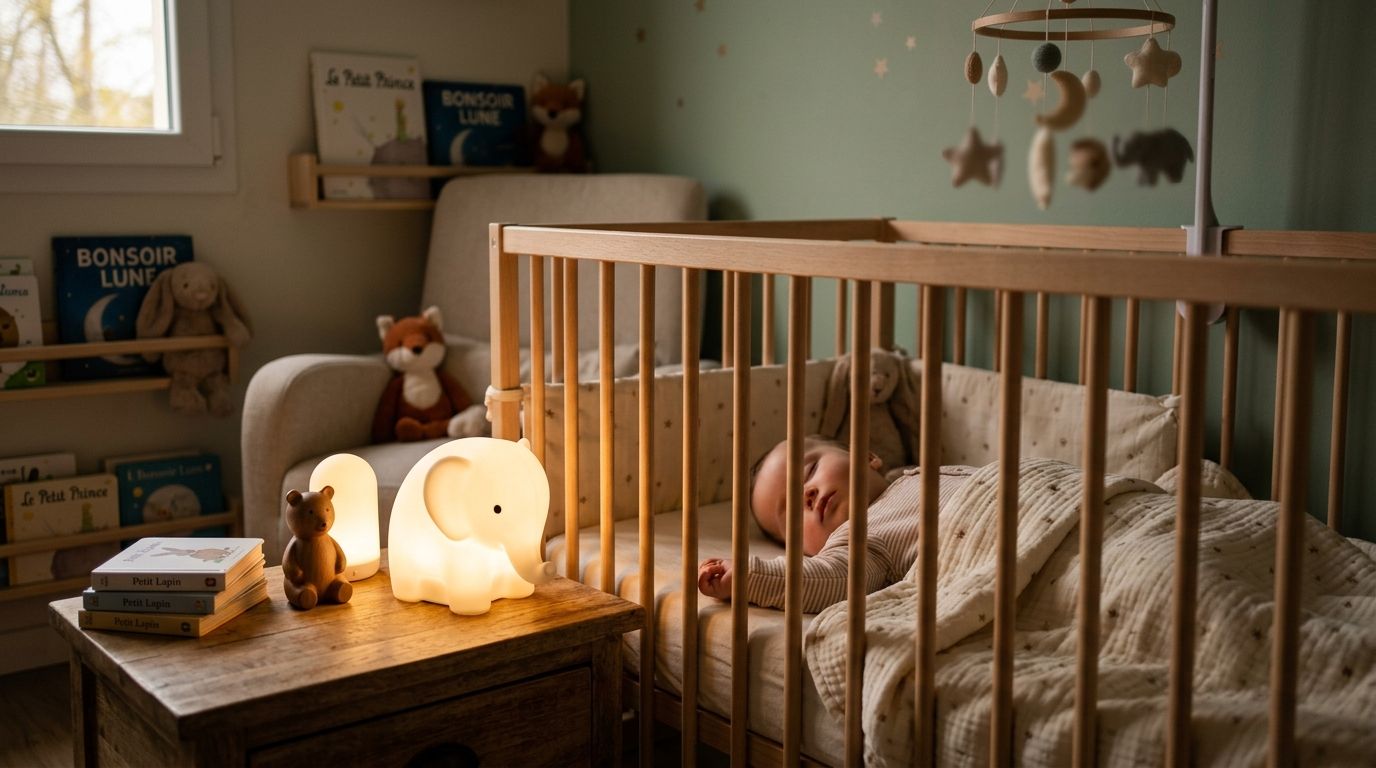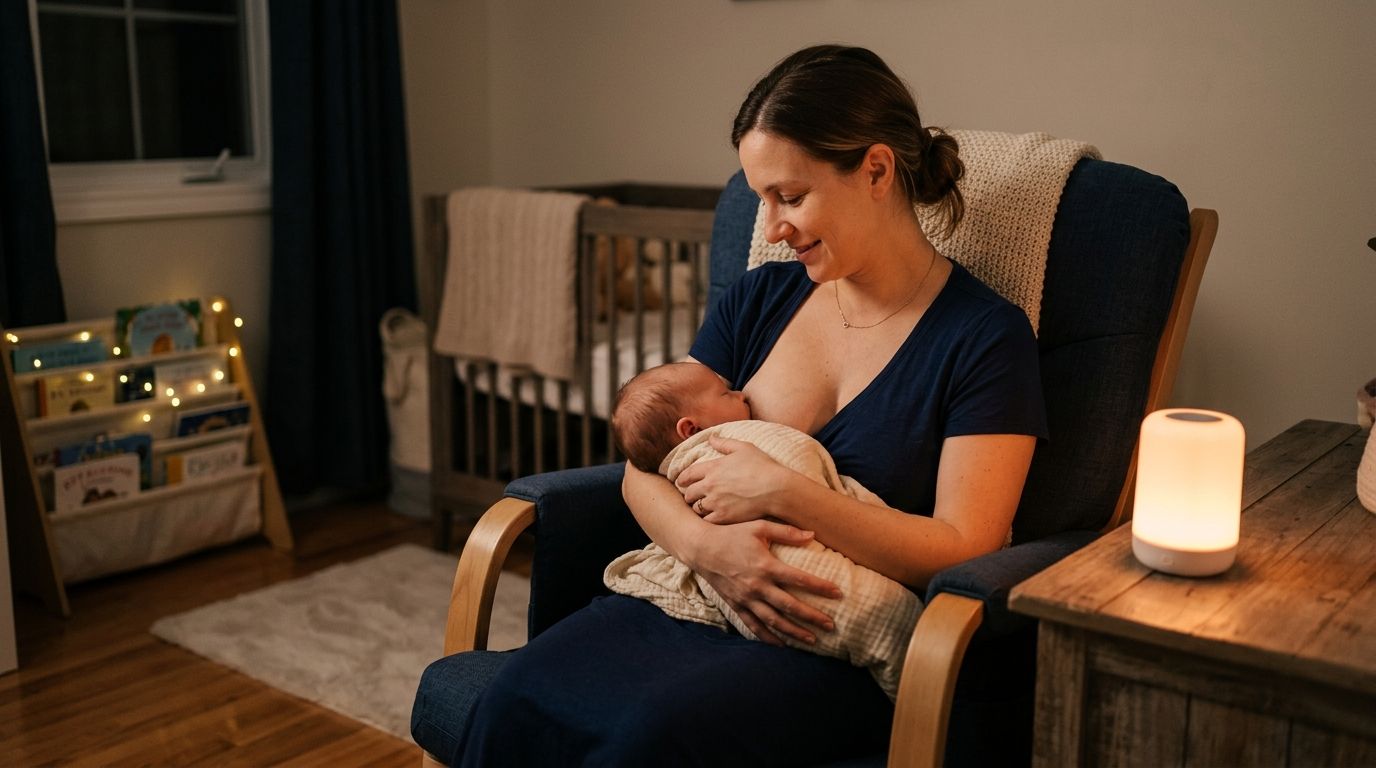
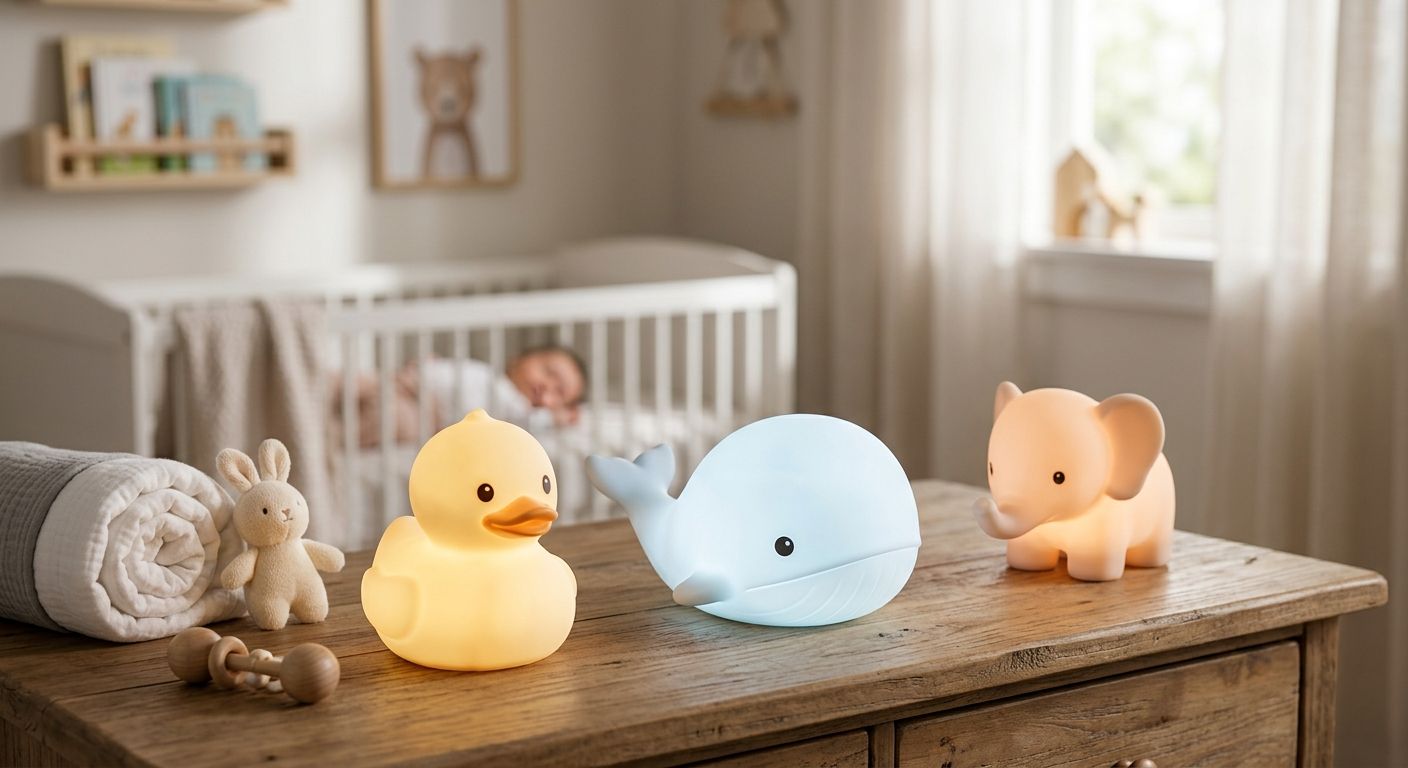
Fifteen animal-shaped silicone night lights, one bedtime problem each solves differently: this guide ranks the strongest picks in the Milo & Lua silicone night light lineup by the exact bedtime scenario they're built for, not by popularity.
Best overall: Mona la Lune, veilleuse lune. Best for newborns and broken nights: Stella l'Étoile, veilleuse étoile. Best for toddlers afraid of the dark: Dino le Dinosaure, veilleuse dinosaure.
- Mona la Lune wins overall for its adjustable low light built around night feeds and day/night cues.
- Stella l'Étoile is the pick for the first weeks home with a newborn and fragmented sleep.
- Dino le Dinosaure targets toddlers age three to four going through a fear-of-the-dark phase.
- Every veilleuse silicone in the 2026 lineup is soft-touch, rechargeable and activates with a tap.
- Pepo le Pingouin is built specifically for shared bedrooms where two kids need their own light.
Why this matters
A silicone night light isn't a lamp you compare on lumens. It's a bedtime prop a toddler touches, drops, chews on, and eventually asks for by name. The Milo & Lua collection is built around that reality: soft rechargeable bodies, warm glow instead of blue-white LED, and a tap-to-light gesture a two-year-old can operate alone.
The problem for parents shopping in 2026 is that fifteen-plus character designs look interchangeable at first glance. They aren't. Each one in this lineup answers a different sentence a parent actually says out loud at 8pm: "she won't settle," "he's scared of the dark," "they're sharing a room now." Matching the veilleuse silicone to that sentence is the whole decision.
What makes the best veilleuse silicone
- Soft, bite-safe silicone body — no hard edges, no glass, safe for a toddler to hold and carry room to room
- Warm, non-blue glow — light close to candle-temperature, which doesn't suppress melatonin the way cool white LEDs do
- Touch activation — a tap turns it on or dims it, no fumbling for a switch in the dark
- Rechargeable battery — no button-cell replacements, no batteries dying mid-week
- Adjustable low brightness — critical for night feeds, where full brightness wakes a baby back up
- A design a child actually wants at their bedside, not just a design a parent likes in a product photo
Veilleuse silicone lineup at a glance
| Night light | Best for | Standout feature | Key limitation |
|---|---|---|---|
| Mona la Lune | Night feeds, day/night cues | Low, adjustable glow | Less exciting for older toddlers who want a "character" |
| Stella l'Étoile | First newborn weeks | Extremely soft, minimal glow | Too dim once a toddler wants to read or explore in low light |
| Mimi le Chat | Light sleepers | Very low, dimmable output | Least distinctive shape of the lineup |
| Dino le Dinosaure | Fear of the dark, ages 3-4 | Child controls the light | Can feel too "big kid" for a baby's room |
| Zac le Dragon | Move to a big-kid bed | Framed as a companion, not a doudou | Not aimed at infants |
| Pepo le Pingouin | Shared bedrooms | Low, diffuse light both kids can reach | Less useful in a single-child room |


1. Mona la Lune: best veilleuse silicone for night feeds
Mona la Lune is built around the 2am feed, not the bedtime story. The glow sits low and adjustable, dim enough not to fully wake a baby but bright enough to see a bottle or a latch. Its round shape doubles as a day/night marker parents lean on in the newborn months.
Mona la Lune pros:
- Adjustable brightness low enough for feeds without overstimulating a baby
- Round, neutral shape that works in a shared nursery
- Touch-activated, usable one-handed while holding a baby
Mona la Lune cons:
- Less "character-driven" appeal for a toddler past age two
- Doesn't solve fear-of-the-dark problems that show up later
Best for: parents in the newborn-to-12-month stage managing night feeds. Verdict: Buy.
2. Stella l'Étoile: best veilleuse silicone for the first weeks home
Stella l'Étoile is pitched at the exact window most parents underestimate: the first days home, when sleep is fragmented and everything about the nursery still feels unfamiliar. The glow is intentionally minimal, almost a presence more than a light source.
Stella l'Étoile pros:
- Very soft output, unlikely to disrupt a newborn's sleep cycle
- Simple star shape that reads as calm rather than stimulating
- Rechargeable, one less thing to manage in the newborn fog
Stella l'Étoile cons:
- Too dim once a toddler wants enough light to read or play
- Overlaps functionally with Mona la Lune, so most families need only one
Best for: the first weeks to months with a newborn. Verdict: Buy.
3. Mimi le Chat: best veilleuse silicone for light sleepers
Mimi le Chat exists for the baby who wakes at a footstep in the hallway. Its lowest setting sits below what the other veilleuse silicone models in the lineup offer, aimed squarely at light sleepers and night-feed routines where every extra lumen matters.
Mimi le Chat pros:
- Lowest dimmable setting in the current lineup
- Adjustable range that grows with the child past infancy
- Soft silicone shape, comfortable for a baby to hold
Mimi le Chat cons:
- Least distinctive design compared to the dragon, dinosaur or unicorn options
- Overkill for a heavy sleeper who won't notice the difference
Best for: babies and toddlers who wake at the smallest change in light. Verdict: Buy.
4. Dino le Dinosaure: best veilleuse silicone for fear of the dark
Around age three or four, imagination outpaces reasoning, and "something's under the bed" becomes a nightly negotiation. Dino le Dinosaure is built for that stage: the child, not the parent, controls the light, which matters more for reassurance than the light itself.
Dino le Dinosaure pros:
- Framed and sized for toddlers, not infants
- Child operates it independently, which reduces bedtime negotiation
- Bold, memorable shape a toddler bonds with quickly
Dino le Dinosaure cons:
- Not designed for the newborn stage
- Bigger presence in a room than the minimalist Stella l'Étoile
Best for: toddlers around ages 3-4 going through a fear-of-the-dark phase. Verdict: Buy.
5. Zac le Dragon: best veilleuse silicone for the move to a big-kid bed
The day a child declares themselves too old for a baby night light is a real milestone, and Zac le Dragon is positioned for exactly that transition. It reads as a companion object rather than a soft toy, which matters to a kid trying to feel grown-up.
Zac le Dragon pros:
- Positioned as a "big kid" object, not an infant accessory
- Child keeps control of the light, reinforcing independence
- Distinct silhouette that ages well past toddlerhood
Zac le Dragon cons:
- Not the right pick for infants or very young toddlers
- Some kids may prefer a softer, rounder shape at this age
Best for: kids transitioning out of a crib or toddler bed. Verdict: Buy.
6. Pepo le Pingouin: best veilleuse silicone for shared bedrooms
Two children in one room turns bedtime into a negotiation over a single light switch. Pepo le Pingouin is designed around that specific friction: low, diffuse output that doesn't overpower a shared space, with a shape both kids can reach and operate themselves.
Pepo le Pingouin pros:
- Diffuse glow suited to a room with two sleepers
- Both children can activate it without needing a parent
- Neutral enough to suit different ages sharing a room
Pepo le Pingouin cons:
- Less targeted if only one child uses the room
- Doesn't address fear-of-the-dark the way Dino le Dinosaure does
Best for: siblings sharing a bedroom. Verdict: Buy.
How this list was ranked
Each veilleuse silicone was scored against the criteria above: softness and safety of the silicone body, warmth of the glow, whether brightness adjusts low enough for night feeds, and whether the design fits a specific age or bedtime problem rather than a generic "cute animal" slot. Items that solved a narrower, real scenario ranked above items that tried to do everything.
“A toddler who controls their own night light stops negotiating over the parent's light switch.”
Which veilleuse silicone should you choose?
For most households in 2026, start with the age and the problem, not the animal. A newborn needs Stella l'Étoile or Mona la Lune for feeds and fragmented nights. A toddler afraid of the dark needs Dino le Dinosaure. Two kids sharing a room need Pepo le Pingouin. If you only buy one and want the widest use across the newborn-to-toddler stretch, Mona la Lune remains the safest default.
FAQ
What is a veilleuse silicone and why choose one over a plastic night light?
A veilleuse silicone is a night light with a soft silicone body instead of hard plastic or glass, safe for a baby or toddler to hold and touch directly. The Milo & Lua lineup pairs that soft body with a warm, non-blue glow meant to support sleep rather than disrupt it.
Is a warm-glow night light better for sleep than a white LED one?
A warm, low-intensity glow is generally recommended over bright white or blue-toned light near bedtime because cooler light tones are more associated with alertness. Every model in the Milo & Lua lineup is built around a warm, dimmable output rather than a bright white LED.
Which veilleuse silicone is best for a newborn?
Stella l'Étoile and Mona la Lune are both built for the newborn stage, with Stella suited to the very first weeks home and Mona built specifically around night feeds and day/night cues.
How do touch-activated night lights work?
A tap on the silicone body turns the light on, off, or cycles through brightness levels, so a toddler can operate it without finding a switch in the dark. This is standard across the Milo & Lua veilleuse silicone lineup.
Can one night light work for two children sharing a room?
Pepo le Pingouin is designed specifically for shared bedrooms, with a diffuse glow low enough for two sleepers and a shape both children can reach and activate themselves.
What age is right for a fear-of-the-dark night light?
Fear of the dark commonly emerges around ages three to four as imagination develops faster than reasoning. Dino le Dinosaure is built for that exact age range, giving the child control over the light itself.
Are silicone night lights rechargeable?
Yes, every night light in the Milo & Lua veilleuse silicone range is rechargeable, removing the need to replace button-cell batteries.
One last thing
The detail parents underestimate is who controls the light, not how it looks. Dino le Dinosaure and Zac le Dragon are both built so the child taps the light on themselves rather than waiting on a parent, and that single design choice does more for a fear-of-the-dark phase than any amount of glow warmth. If bedtime negotiation is the actual problem in your house in 2026, hand over control before you hand over a new character.