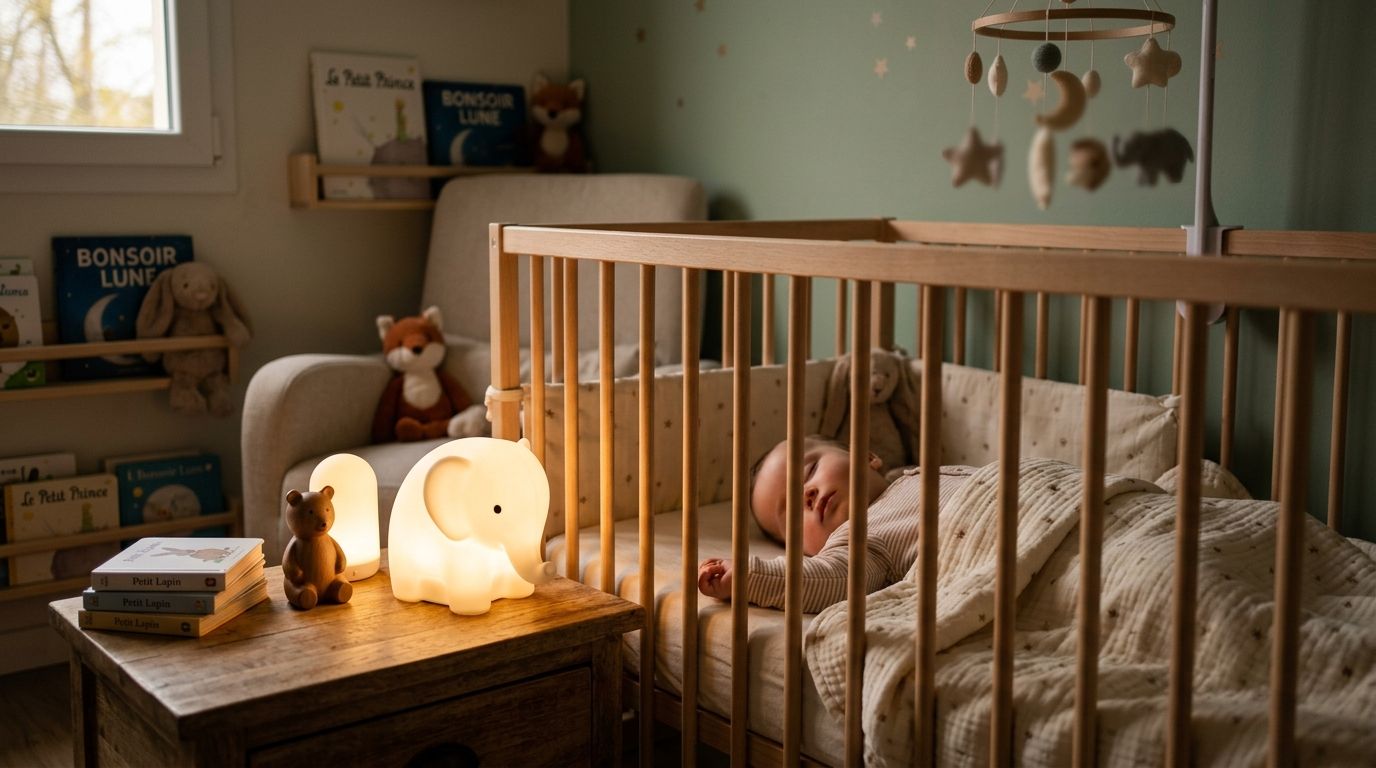
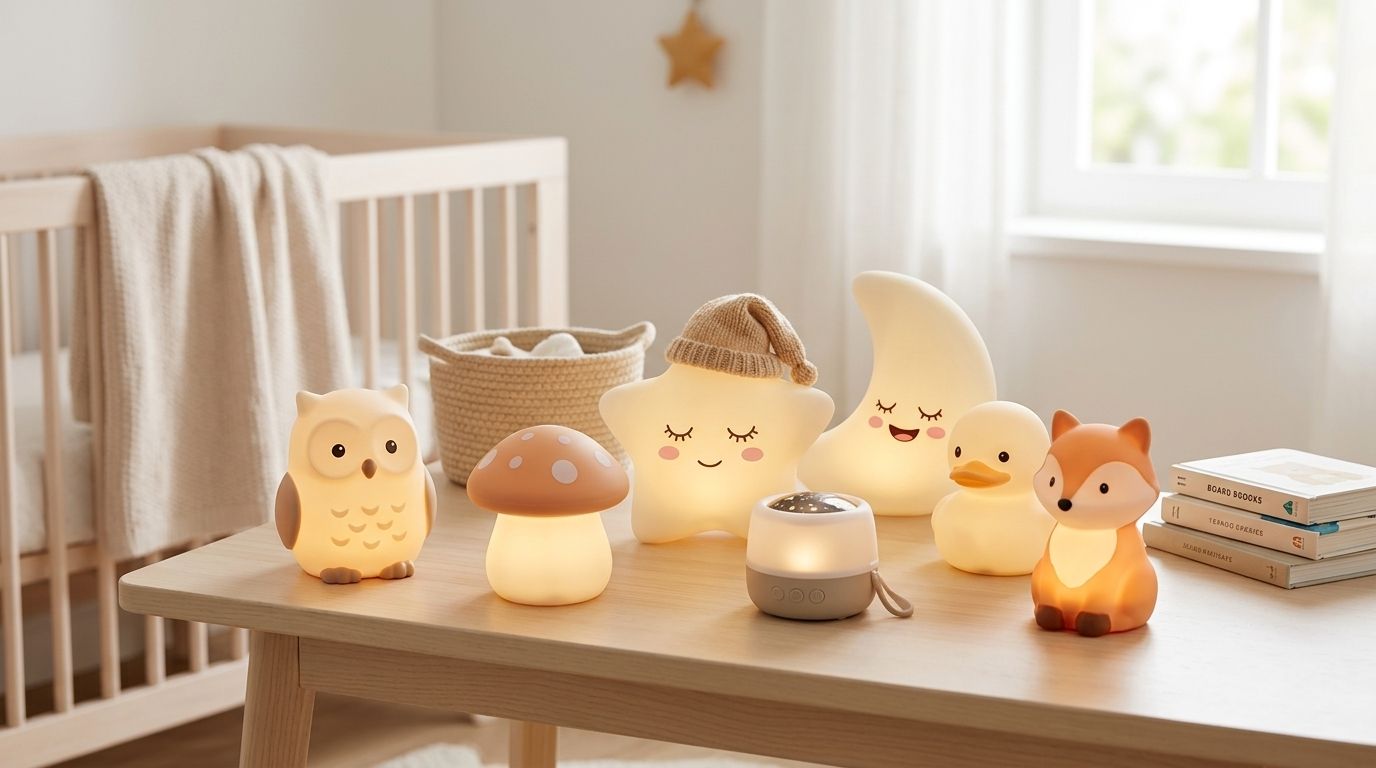
Milo & Lua's silicone night light range spans newborn feeds to shared kids' bedrooms, and picking the wrong one usually means buying a second light within a year. This guide ranks the best baby night lights of 2026 by the actual problem each one solves, not just by design.
- Mona la Lune wins best overall for newborn-to-toddler night feeds and day/night cues.
- Stella l'Étoile is the best baby night light for the first weeks home with a newborn.
- Dino le Dinosaure is built for ages 3-4 fear-of-the-dark bedtimes, not for infants.
- Pepo le Pingouin is the pick for two children sharing one bedroom.
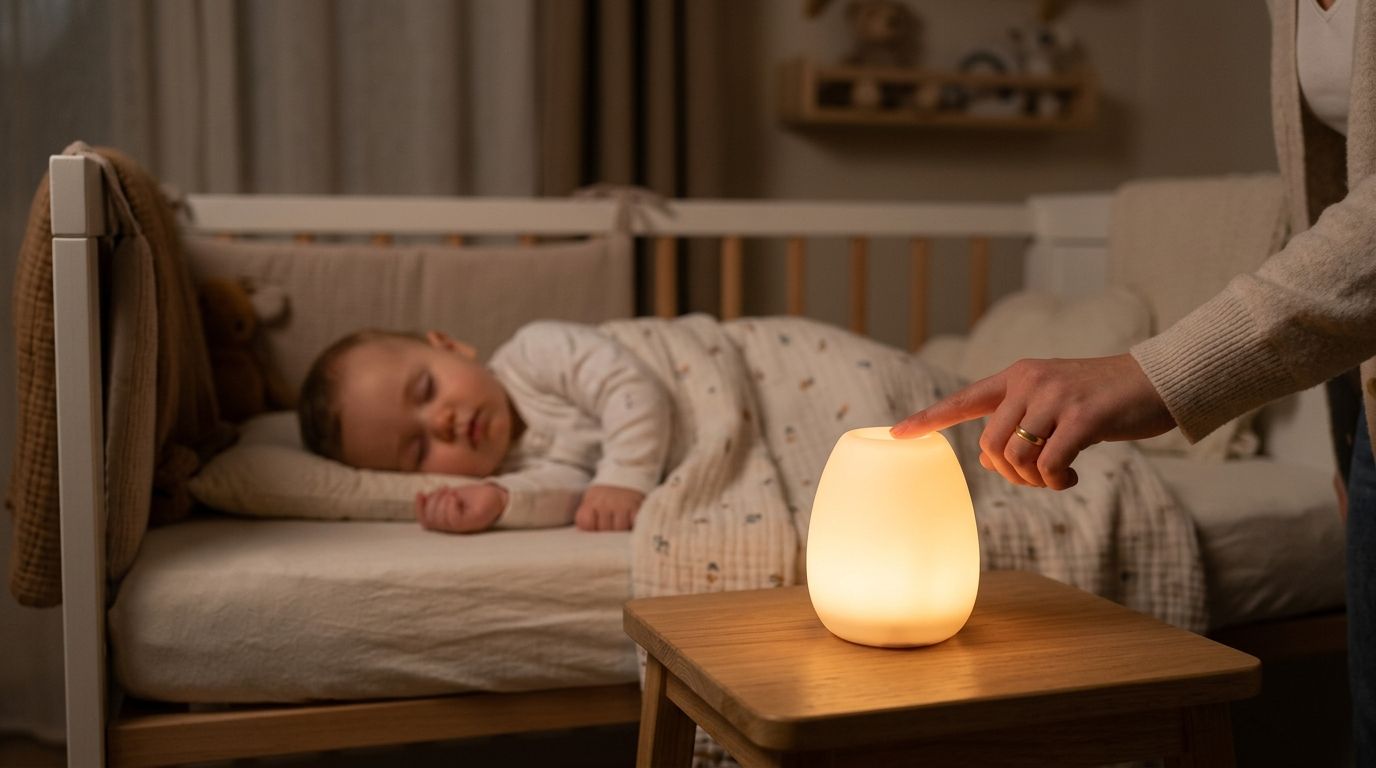
- Every Milo & Lua night light is touch-activated, rechargeable, and made from soft silicone.
Why this matters
A baby night light isn't a nightstand lamp with a cute face on it. The wrong brightness level disrupts melatonin production, the wrong shape gets abandoned by a 4-year-old who wants a light they can control, and a light without touch activation means fumbling for a switch during a 3am feed. Milo & Lua builds its whole 2026 range around one mechanic — a soft-silicone body that glows warm when tapped — but the seventeen designs split into real, distinct use cases once you look past the animal faces.
The seven night lights below cover newborn stage through the shared-bedroom years. None of them compete for the same job.
What makes the best baby night light
- Touch-activated warm glow instead of a blue-tinted LED that can interfere with a child's wind-down
- Rechargeable battery so there's no fumbling with disposable batteries at 2am
- Soft silicone body that survives being dropped, chewed, or thrown across a crib
- Low, non-disruptive brightness that guides a night feed without fully waking a baby
- Portability for the light to travel between the nursery, the car seat, and grandma's house
- A design that still gets used at age 4, not just age 4 months
Best baby night lights in 2026 — at a glance
| Night light | Best for | Standout feature | Key limitation |
|---|---|---|---|
| Mona la Lune | Newborn night feeds & day/night cues | Adjustable low glow built for feeding sessions | Simple moon shape has less character appeal past toddlerhood |
| Stella l'Étoile | The first weeks home with a newborn | Very soft, low-stimulation glow for broken nights | Too dim for a toddler who wants a brighter room light |
| Bulle la Baleine | Travel and car naps | Round, enveloping light built to move with the family | Whale shape reads more "soothing" than "fun" for older kids |
| Mimi le Chat | Light sleepers who wake at every sound | Very low, finely adjustable glow for feeds without full wake-ups | The dimmest setting can feel too faint for a nervous toddler |
| Lily la Licorne | Toddlers who resist bedtime | Bright, appealing character kids ask for at bedtime | Novelty-driven appeal can fade as tastes change |
| Dino le Dinosaure | Fear of the dark, ages 3-4 | Child controls the light themselves | Not designed as a newborn-stage light |
| Pepo le Pingouin | Two kids sharing a bedroom | Low, diffuse glow each child can reach and use | Single brightness level, not built for reading light |


1. Mona la Lune: best baby night light for newborn night feeds
Mona la Lune is a moon-shaped, touch-activated light built around one job: getting a parent through a night feed without fully waking a newborn. The glow is adjustable and low enough to avoid signaling "daytime" to a baby's circadian rhythm, which is the whole point at this stage.
Mona la Lune pros:
- Adjustable brightness for feeds versus diaper changes
- Soft silicone shape safe for a crib
- Rechargeable, so no battery drawer runs dry mid-week
Mona la Lune cons:
- The moon shape has less "character" pull once a child is old enough to pick favorites
- Single light color, no themed variations
Best for: newborns and infants still on night feeds. Verdict: Buy.
2. Stella l'Étoile: best baby night light for the first weeks home
Stella l'Étoile is built specifically for the earliest, most fragmented nights — the weeks where a newborn wakes every two to three hours and any bright light resets the whole household's sleep. The glow sits deliberately low.
Stella l'Étoile pros:
- Very low-stimulation glow suited to newborn nurseries
- Touch-activated for one-handed use during feeds
- Soft silicone body, safe near a bassinet
Stella l'Étoile cons:
- Too dim once a toddler wants to see the room, not just avoid startling
- Star shape is neutral rather than a character a child bonds with
Best for: the first weeks and months at home with a newborn. Verdict: Buy.
3. Bulle la Baleine: best baby night light for travel and car naps
Bulle la Baleine is designed around portability first. Its round, enveloping glow is meant to move — weekends at grandparents', vacations, a different room, a car seat nap — without the child losing the light cue that says "it's sleep time now."
Bulle la Baleine pros:
- Compact, round shape built to travel
- Consistent glow that recreates the home bedtime cue anywhere
- Rechargeable, no charger dependency at the destination if charged ahead
Bulle la Baleine cons:
- Whale design skews calming rather than "fun," less of a draw for a toddler who wants excitement at bedtime
- Not the brightest option if a child wants to see the whole room
Best for: families who travel often or need one light for multiple locations. Verdict: Buy.
4. Mimi le Chat: best baby night light for light sleepers
Mimi le Chat is built for the baby who wakes at every creak in the house. The glow is very low and finely adjustable, made for night feeds without tipping a light sleeper into a full wake-up.
Mimi le Chat pros:
- Finely adjustable, very low glow setting
- Touch-activated for quiet, one-tap use during feeds
- Soft silicone shape, safe in a crib
Mimi le Chat cons:
- The lowest setting can feel too faint for a toddler who wants reassurance, not subtlety
- Cat shape may not carry the same appeal for kids who prefer bolder characters
Best for: babies who wake easily and need minimal light disruption. Verdict: Buy.
5. Lily la Licorne: best baby night light for bedtime resistance
Lily la Licorne exists for the toddler who negotiates bedtime every single night. The unicorn design and warm glow are built to make turning the light on part of the fun, not another rule.
Lily la Licorne pros:
- Character design toddlers actively ask for at bedtime
- Touch-activated, so the child controls it themselves
- Warm glow that still supports wind-down, not stimulation
Lily la Licorne cons:
- Appeal is novelty-driven and can fade as a child's tastes shift
- Not aimed at newborn-stage brightness needs
Best for: toddlers who resist going to bed. Verdict: Buy.
6. Dino le Dinosaure: best baby night light for fear of the dark
Dino le Dinosaure is built for the stage — usually around ages 3 to 4 — when a child's imagination starts outrunning their sense of what's real, and the dark stops being neutral. The dinosaur is deliberately not a stuffed animal; it's a guardian the child controls.
Dino le Dinosaure pros:
- Sized and framed as a "guardian," which matters for fear-based bedtime resistance
- Child operates the light directly, which builds a sense of control
- Soft silicone, still safe for hands-on nighttime use
Dino le Dinosaure cons:
- Not built for infant-stage feeding needs
- Character-heavy design won't suit parents who want a neutral nursery light
Best for: children around ages 3-4 dealing with nighttime fears. Verdict: Wait until your child reaches that stage — buying it earlier means it sits unused.
7. Pepo le Pingouin: best baby night light for shared bedrooms
Pepo le Pingouin is built for the logistics of two children in one room, where one bedtime routine has to work for two different heights, two different bedtimes, and two different comfort levels. The glow is low and diffuse rather than a single beam.
Pepo le Pingouin pros:
- Diffuse glow that doesn't spotlight one child's side of the room
- Positioned low enough for both children to reach and use
- Warm light that supports both kids' wind-down at once
Pepo le Pingouin cons:
- Single brightness level, not adjustable for one child wanting more light than the other
- Not built as a reading light for an older sibling
Best for: two children sharing one bedroom. Verdict: Buy.
“A night light only earns its place in the room once the child can turn it on themselves.”
How we ranked these
Each night light was scored against the six criteria above — touch activation, rechargeable power, silicone safety, low disruptive brightness, portability, and long-term appeal — then matched to the single age stage or household situation it solves best. That's why no two items on this list share a "best for" label: a newborn-feed light and a shared-bedroom light are solving different problems, not competing for the same one.
Which baby night light should you choose?
If you're bringing a newborn home in 2026, Mona la Lune or Stella l'Étoile cover the feeding-and-day/night-cue stage better than anything designed for an older child. If bedtime resistance is the actual problem, not sleep itself, Lily la Licorne solves that specifically. If your child has just started naming what they're scared of at night, wait for Dino le Dinosaure rather than buying early. For a household with two kids in one room, Pepo le Pingouin is the only design built around that constraint.
FAQ
What is the best baby night light in 2026?
Mona la Lune is the best overall pick for 2026 because its adjustable, low glow works through both newborn night feeds and the early toddler stage. For a narrower need — newborn only, shared rooms, or fear of the dark — a more specific pick from this list fits better.
Is a touch-activated night light better than a switch-based one?
Yes for parents doing night feeds, because a touch-activated light like the Milo & Lua range can be turned on with one hand in the dark without fumbling for a switch. It also lets a toddler operate the light themselves once they're old enough.
What brightness level is safe for a baby's sleep?
A warm, low glow that doesn't mimic daylight is the standard recommendation, since bright or blue-toned light can interfere with a baby's melatonin production. Night lights built specifically for newborns, like Stella l'Étoile, are set deliberately dim for this reason.
At what age does a child need their own night light?
Fear of the dark typically emerges around ages 3 to 4 as imagination develops faster than a child's sense of what's real. That's the stage a light like Dino le Dinosaure is designed for, rather than infancy.
Can two children share one night light?
Yes, if the light produces a diffuse, low glow both children can reach, like Pepo le Pingouin. A single-beam or high-brightness light tends to favor whichever child is closer to it.
Are rechargeable baby night lights worth it over battery-powered ones?
Rechargeable night lights remove the risk of a dead battery during a night feed, which is the exact moment a parent doesn't want to troubleshoot a light. Every Milo & Lua night light in this list is rechargeable rather than disposable-battery powered.
Is silicone a safe material for a baby night light?
Soft silicone is a common choice for nursery products because it withstands drops, doesn't shatter, and has no sharp edges if a baby handles it directly. It's the base material across the entire Milo & Lua 2026 range.
How many night lights does a family actually need?
Most families end up with more than one as a child moves through stages: a newborn-specific light, then a toddler or fear-of-the-dark light, and sometimes a portable one for travel. This list of seven maps to those distinct stages rather than one light doing every job.
One last thing
The detail parents miss most often: the "best for" label matters more than the character design. A dinosaur-shaped light bought for a newborn sits in a drawer for three years, and a moon-shaped light bought for a fearful 4-year-old doesn't give them the sense of control that actually solves the problem. Match the stage first, pick the animal second.